As commercial fleets become increasingly connected and data-driven, artificial intelligence is playing a pivotal role in improving road safety, reducing operational risks, and enhancing fleet performance. Among the companies leading this transformation is LightMetrics, a global AI-powered video telematics provider that is redefining how fleets leverage camera data to make smarter and safer decisions. In an exclusive interview with Bus Coach India Magazine, Soumik Ukil, Co-founder and CEO of LightMetrics, shared the company’s journey, the vision that inspired its creation, and how AI is helping bridge the gap between raw video footage and actionable safety intelligence. Founded by a team of engineers with deep expertise in advanced technologies, LightMetrics was established with a clear mission: to build an intelligent AI layer capable of transforming ordinary camera feeds into meaningful safety insights. The company recognised early that while cameras were becoming increasingly common across commercial vehicles, the industry lacked the intelligence needed to interpret video data accurately and translate it into real-world safety outcomes. Today, LightMetrics has evolved into a global player in AI-driven fleet safety and risk management, supporting commercial fleets across India, North America, Australia and New Zealand, the Middle East, Latin America, and Europe. The company continues to pursue its broader vision of making high-quality AI-powered safety intelligence accessible to fleets of all sizes, regardless of geography or hardware platform. During the conversation, Ukil highlighted three major challenges that shaped LightMetrics’ innovation journey. These included the high rate of false alerts generated by traditional telematics systems, the industry’s dependence on proprietary hardware ecosystems, and the lengthy deployment cycles associated with video telematics solutions. By developing highly accurate Edge AI models, creating a hardware-agnostic platform, and dramatically reducing integration timelines, LightMetrics has enabled fleet operators and technology partners to deploy intelligent safety solutions faster and more effectively than ever before.
Q: LightMetrics has emerged as a notable player in AI-powered video telematics. Could you share the journey of the company and the core vision behind its formation?
Founded by engineers with deep expertise in cutting-edge technologies, LightMetrics was built with a singular vision: to create the AI intelligence layer that bridges the gap between a camera feed and real-world safety outcomes. From the outset, the company focused on making AI-powered video telematics universally accessible — enabling fleets of all sizes to deploy advanced safety intelligence through any operator and across any hardware ecosystem. Today, LightMetrics supports commercial fleets across India, North America, ANZ, the Middle East, LATAM, and Europe, emerging as a global player in AI-driven fleet safety and risk management. The company’s broader mission is to redefine industry standards by ensuring that every commercial vehicle, regardless of geography or fleet size, has access to high-quality AI-powered safety intelligence.
Q: What specific gaps in the fleet safety and commercial mobility ecosystem was LightMetrics aiming to address when it started?
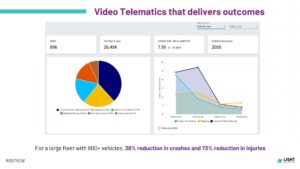
When LightMetrics entered the market, the company identified three critical gaps in the fleet safety and commercial mobility ecosystem that needed urgent attention.
First, there was a significant challenge around Edge AI accuracy. Traditional telematics systems often flagged nearly every incident as an “event,” resulting in an overwhelming number of false positives. This not only consumed valuable fleet manager bandwidth but also weakened driver trust in safety systems. LightMetrics focused on building highly accurate AI models capable of identifying meaningful safety events with far greater precision. Second, the industry was heavily dependent on proprietary hardware ecosystems. In many cases, fleet operators risked losing their safety intelligence and data continuity when switching camera providers or hardware platforms. LightMetrics addressed this by developing a hardware-agnostic platform that could seamlessly integrate across devices, ensuring continuity of intelligence without data loss. Third, the company recognised the slow go-to-market timelines associated with building and deploying video telematics solutions from scratch. Traditional integrations could take several months, delaying adoption and scalability. LightMetrics simplified the integration process, enabling partners to launch AI-powered video telematics solutions in as little as three weeks, significantly accelerating deployment timelines and commercial adoption.
Q. LightMetrics recently attracted attention for its funding and growth trajectory. Could you elaborate on the recent investment journey and how the capital will be deployed?
LightMetrics last raised its Series A round in April 2023, and over the past three years, the company has strategically used the capital to scale its global presence and strengthen its AI-powered video telematics platform. The investment has primarily been deployed toward expanding go-to-market teams across North America, Australia, EMEA, LATAM, and Southeast Asia, helping the company grow its deployment footprint to over 30 countries. At the same time, LightMetrics has continued enhancing its platform capabilities to meet the evolving needs of a diverse global customer base.
Q: Could you explain how LightMetrics uses artificial intelligence and computer vision to improve driver behaviour analysis and road safety?
LightMetrics leverages artificial intelligence and computer vision to deliver real-time driver behaviour analysis and proactive road safety interventions. At the core of the platform is the belief that most road incidents are preventable if drivers receive the right intervention at the right time. The company’s AI operates directly on the dashcam using edge computing, enabling it to continuously analyse both road conditions and driver behaviour in real time. The system can detect risks such as distracted driving, tailgating, speeding, and driver drowsiness. When unsafe behaviour is identified, drivers receive instant in-cabin audio alerts, while relevant video clips are shared with fleet managers for targeted coaching and intervention. Because the intelligence runs entirely on-device, fleets benefit from faster response times, reduced dependence on cloud connectivity, and enhanced privacy protection without constant video streaming. Over time, the platform analyses patterns across millions of driving miles, enabling more precise coaching, fewer collisions, lower insurance costs, and a driver-first safety culture that focuses on support rather than surveillance.
Q. How important is video telematics becoming for commercial vehicle operators, especially in the bus and coach segment?
Video telematics is rapidly becoming a critical necessity for commercial vehicle operators, particularly in the bus and coach segment, where passenger safety and liability management are paramount. What was once considered a “nice-to-have” technology is now increasingly viewed as essential operational infrastructure. For fleet operators, a single disputed incident without video evidence can result in financial losses that far exceed the annual investment in video telematics systems. Beyond incident resolution, the technology is playing a growing role in improving driver accountability, reducing risk, and enhancing overall fleet safety. At the same time, regulatory momentum across global markets — and increasingly in India — is accelerating adoption. Governments and transport authorities are moving toward stricter safety and in-cabin monitoring requirements, not just for commercial fleets but especially for passenger-carrying vehicles such as buses and coaches.
Q. Driver fatigue and distraction continue to be major concerns globally. How effective are AI-powered driver monitoring systems in reducing accidents and unsafe driving practices?
AI-powered driver monitoring systems are proving to be highly effective in reducing accidents and unsafe driving behaviours across commercial fleets globally. Industry data consistently shows that fleets deploying AI-based monitoring solutions alongside active coaching programs can achieve a 20–40% reduction in unsafe driving events within the first 90 days.
The effectiveness of these systems lies in their behavioural approach rather than a punitive one. Instead of simply flagging violations, the AI identifies driving patterns, enables targeted coaching, and equips fleet managers with objective evidence to facilitate structured and constructive conversations with drivers. In the case of fatigue detection, AI systems can identify early warning signs such as microsleep events, prolonged eyelid closure, and repeated yawning patterns even before drivers themselves recognise fatigue. This critical early intervention window plays a major role in preventing accidents before they occur. Equally important is the accuracy of detection. High precision and low false-positive rates are essential for building driver trust and enabling sustained behavioural change. Solutions like RideView are designed with this balance in mind, ensuring that alerts remain meaningful, actionable, and reliable.
Q. How do you see the Indian market evolving for connected mobility and intelligent transport technologies over the next five years?
India is approaching a major inflection point in connected mobility and intelligent transport technologies, driven by a combination of regulatory, operational, and financial shifts. One of the biggest catalysts will be the transition of ADAS and safety-related AIS standards from guidelines into active enforcement, accelerating the adoption of advanced fleet safety technologies. At the same time, the commercial fleet ecosystem is becoming increasingly formalised, with large organised operators scaling rapidly and competing not just on fleet size, but on data-driven operational efficiency and safety performance. Another key trend is the growing linkage between telematics data and financial services. Insurers and lenders are increasingly using fleet performance and risk data to influence insurance premiums and financing decisions, creating a strong ROI-driven case for telematics adoption even among smaller fleet operators. Over the next five years, video telematics is expected to become standard infrastructure for commercial fleets seeking institutional financing, insurance optimisation, or large contract-based transport opportunities. Operators that invest early in building strong data foundations are likely to gain a significant long-term competitive advantage over those that delay adoption until regulations mandate it.
Q. What opportunities do you see in the bus, coach, and public transportation segment specifically?
The bus, coach, and public transportation segment represents one of the most significant growth opportunities for intelligent mobility and AI-powered safety technologies. Unlike cargo transportation, passenger transit carries far greater public liability, regulatory scrutiny, and social accountability, shifting industry priorities from simple vehicle tracking to comprehensive risk mitigation and passenger safety. LightMetrics sees several strategic opportunities in this space. One major area is advanced Driver Monitoring Systems (DMS) for large-scale passenger safety. Long hours, dense traffic conditions, and demanding operating environments make fatigue and distraction critical risks for bus and coach drivers. Using Edge AI, LightMetrics enables real-time detection of drowsiness, microsleeps, distraction, and mobile phone usage, while its False Positive Filtering (ΦFP™) technology helps minimise alert fatigue and improve operational reliability. Another key opportunity lies in enhancing blindspot visibility and preventive safety without requiring fleets to replace existing camera infrastructure. Public transport vehicles typically have large blind spots, and traditional CCTV systems are often limited to post-incident review. LightMetrics enables operators to integrate AI-driven preventive alerts while leveraging existing camera setups to improve real-time driver visibility and situational awareness. The company also sees growing momentum through government-led transport digitisation and Smart City initiatives. As regulators globally move toward mandating video telematics and in-cabin monitoring for public transport, LightMetrics helps transport service providers comply with evolving requirements while maintaining flexibility across hardware ecosystems. Additionally, the rapid electrification of public transport is creating new demand for AI-driven eco-driving and driver coaching solutions. Harsh driving behaviour can significantly impact EV battery efficiency and vehicle health. By identifying unsafe or inefficient driving patterns, LightMetrics enables fleets to implement targeted coaching programs that improve driver performance, optimise battery usage, and reduce total cost of ownership.
Overall, the company believes public transportation will increasingly demand highly accurate, scalable, and hardware-flexible AI platforms capable of improving safety, operational efficiency, and long-term fleet profitability.
Q. What trends are likely to define the next phase of innovation in video telematics and intelligent fleet management?
The next phase of innovation in video telematics and intelligent fleet management will be defined by a major philosophical shift — from purely punitive monitoring systems to more driver-centric and behaviour-focused approaches. The industry is increasingly recognising drivers as skilled professionals, with technology evolving to support and empower them rather than simply penalise them. One of the biggest emerging trends is self-coaching. Modern AI systems are beginning to provide drivers with real-time visibility into their own driving behaviour, enabling many to self-correct without direct managerial intervention. Fleet managers can then focus their attention only on higher-risk cases that require additional coaching or support.
At the same time, the industry is moving toward more positive reinforcement models through gamification, rewards, and performance-based recognition systems. Leaderboards, incentives, and driver engagement programs are proving to be effective in encouraging safer driving habits and improving long-term behavioural outcomes. Personalisation is also expected to become far more advanced. AI-driven coaching systems are increasingly capable of adapting to different driving environments and operational contexts — recognising, for example, that a city bus driver in Bengaluru faces vastly different challenges than a long-distance highway coach operator. Another major area of innovation will be the integration of generative AI into fleet operations. The industry is actively exploring how generative AI can simplify fleet management dashboards, automate operational insights, and transform complex telematics data into actionable, easy-to-understand narratives for both fleet managers and drivers. As these capabilities evolve, generative AI has the potential to significantly reshape the in-cab experience and the broader fleet intelligence ecosystem.
Q. How is LightMetrics integrating emerging technologies such as edge AI, cloud computing, and machine learning into its solutions?
LightMetrics integrates edge AI, cloud computing, and machine learning through a unified full-stack architecture designed specifically for real-time fleet safety and intelligence. Rather than operating as disconnected point solutions, the company’s edge, cloud, and ML capabilities work together as a single integrated system. At the edge level, AI inference runs directly on-device, enabling real-time detection of critical safety events such as driver fatigue, distraction, and collision risks without relying on cloud connectivity. This allows fleets to receive immediate in-cabin alerts for time-sensitive situations where latency can directly impact safety outcomes. Cloud infrastructure powers fleet-wide analytics, dashboarding, large-scale data processing, and continuous model updates. It enables fleet managers to access scalable, always-updated operational insights across vehicles, drivers, and geographies. At the same time, LightMetrics’ machine learning pipeline continuously improves system accuracy over time. Every reviewed incident, flagged false positive, and new road condition contributes to ongoing model retraining, allowing the platform to adapt to specific fleet environments and operating conditions. A key differentiator is the company’s hardware-agnostic architecture, which allows this AI intelligence stack to be deployed across existing camera infrastructure without requiring fleets to replace their current hardware systems.
Q. Finally, what is your long-term vision for LightMetrics and the future of AI-powered mobility solutions globally?
The broader belief is that AI-powered mobility and video telematics will eventually evolve from being a premium technology offering into a baseline industry expectation, much like seatbelts and airbags became standard safety infrastructure over time. LightMetrics also sees a significant opportunity in democratising access to advanced fleet safety technologies beyond developed markets. The company’s focus is not only on large global fleets, but also on enabling operators across India, Southeast Asia, Africa, and Latin America to benefit from AI-driven mobility intelligence. Ultimately, the vision is to build scalable technology that can improve road safety outcomes globally and help save lives at scale in markets where the need for intelligent mobility solutions is growing most rapidly.