India’s electric bus industry is rapidly moving from early adoption to large-scale deployment, reshaping the future of public transportation across the country. As cities seek cleaner, more efficient mobility solutions and operators look to reduce operating costs, electric buses are emerging as a key pillar of India’s sustainable transport strategy.
In an exclusive interview with Bus Coach India Magazine, Ganesh Mani, CEO of Switch Mobility, shared his insights on the evolving electric bus landscape, emerging market opportunities, and the company’s vision for expanding high-capacity electric mobility solutions in India and beyond. According to Mani, the Indian electric bus market has witnessed remarkable growth over the past five years, recording a compound annual growth rate of nearly 35 percent. Government-led initiatives and increasing adoption by State Transport Undertakings (STUs) have played a pivotal role in accelerating deployment. While more than 15,000 electric buses have already been introduced across various state transport fleets, he believes the industry is only scratching the surface of its true potential.
Q: Electric mobility is gaining momentum across segments. What are the most significant trends currently influencing the electric bus market in India, both from a technology and adoption standpoint?
India’s electric bus market has moved well beyond the pilot stage and is now entering a scale-up phase. Over the last five years, the segment has grown at a CAGR of around 35%, driven largely by State Transport Undertaking (STU) adoption supported by government incentives. Today, more than 15,000 electric STU buses are operating across the country, with additional buses being tendered and deployed under various central and state-led programmes. However, electric bus penetration overall in India is just under 2% and the opportunity to expand that number is massive. India currently has around 11,000 electric buses in operation against a national goal to replace nearly 8 lakh diesel buses by 2030, including about 5.5 lakh private buses. With the private sector accounting for nearly 90% of the country’s bus fleet and remaining largely un-electrified, this segment represents the next major growth frontier. While city buses have led adoption so far, we are now seeing growing momentum in retail segments as well. Intercity applications are emerging as a strong opportunity due to their high daily utilisation and favourable operating economics. This is likely to be followed by staff transportation and school buses, which represent significant addressable markets and are gradually increasing their electric penetration. From a technology perspective, advancements in battery performance, charging solutions, connected vehicle technologies and predictive diagnostics are improving vehicle uptime and operational efficiency. Going forward, wider adoption in intercity and institutional segments will be driven by application-specific solutions around battery range, charging time and operating requirements, supported by a continued policy push towards electrification.
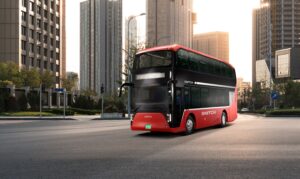
Q: What are Switch Mobility’s expansion plans for double-decker buses in India and overseas markets?
Our focus is on expanding electric double-decker deployments in cities where the need for high-capacity public transport is growing. Today, the platform has already been deployed or showcased across 10 cities, with Mumbai being the largest deployment market. We continue to engage with transport authorities and city operators to identify corridors where double-deckers can deliver the greatest benefit in terms of passenger capacity and operational efficiency. On the international front, we see opportunities in markets that are looking to increase public transport capacity while accelerating electrification. We have already established an export presence through deployments in Mauritius and are expanding our engagements across markets such as Nepal, Bhutan, Seychelles and Sri Lanka. Our upcoming manufacturing facility in Ras Al Khaimah, UAE, will further strengthen our ability to serve GCC, Africa and other international markets. Going forward, our strategy is to scale deployments selectively in markets where the economics, infrastructure and demand are well aligned for high-capacity electric mobility solutions.
Q: Can you share insights into Switch electric bus roadmap, including platform development, localisation strategy, and product differentiation?
Our roadmap is focused on expanding our electric bus portfolio across multiple applications and operating environments. Over the next two years, we plan to offer more than 15 electric bus variants covering different bus sizes and use cases, including city buses, intercity mobility, staff transportation and school buses. The objective is to build platforms that deliver high uptime, strong operating economics and a superior passenger experience. We continue to enhance our products through connected vehicle technologies, advanced diagnostics and application-specific solutions that help improve fleet performance and operational efficiency. Localisation remains a key pillar of our strategy. Increasing localisation not only strengthens supply chain resilience but also helps improve cost competitiveness and supports faster scaling of electric mobility solutions across different market segments.
Q: Do you believe India’s charging infrastructure is ready for large-scale electric bus deployment?
India’s charging infrastructure has made significant progress over the last few years and is increasingly supporting large-scale electric bus deployments. Public charging infrastructure has already crossed 30,000 charging points nationwide, and this is expected to expand further as EV adoption grows. Under the PM e-Drive scheme alone, the government has provisioned support for 88,500 charging sites, reflecting a deliberate effort to build out charging capacity in step with vehicle deployment. For electric buses, however, the focus is not just on public charging but also on depot charging, grid readiness and utility coordination. These are critical for ensuring reliable operations at scale, particularly for high-utilisation fleets. The encouraging part is that charging infrastructure development is now happening alongside vehicle adoption. With continued investments in charging networks, depot electrification and power infrastructure, we believe the ecosystem is moving in the right direction to support the next phase of electric bus growth in India.
Q: How do you view the current size and growth trajectory of the electric bus market in India, and what are Switch key growth priorities and milestones for 2026 and beyond?
The electric bus market in India is now entering a stronger growth phase after remaining relatively subdued over the last two years due to multiple industry and ecosystem-related factors. However, the outlook for FY27 and beyond is significantly more positive, supported by aggressive government push, improving economics and large-scale public transport electrification initiatives. Industry volumes are expected to nearly double from around 5,299 buses last year to nearly 13,000 buses. with EV penetration in buses expected to rise from nearly 4% to around 9% and potentially reach 16% by FY29 This growth will be driven by schemes such as PM e-Drive, along with the government’s broader plans to deploy nearly 50,000 electric buses by FY30. This momentum is underpinned by a robust tender pipeline. Apart from concluded tenders, an additional 4,000 e-buses announced in the Union Budget 2026-27. PM e-Drive earmarks ₹4,391 crore for 14,028 e-buses across nine major cities, while the PM e-Bus Sewa Payment Security Mechanism (₹3,435 crore) backs the deployment of over 38,000 e-buses through FY29.For SWITCH Mobility, our growth strategy is built around a multi-pronged roadmap. We remain focused on consolidating our leadership position in the 9-metre and 12-metre bus segments, while also expanding aggressively into the private and retail mobility market through multiple new products and applications. At the same time, differentiated platforms such as our electric double-decker and tarmac buses, backed by continuous technology enhancements and connected mobility solutions, will continue to strengthen our market positioning.
Q: What recent performance indicators or customer feedback trends reinforce your confidence in Switch Mobility growth potential in these premium bus segments?
Our confidence comes from both market performance and operational outcomes. In FY26, we grew electric bus volumes from 444 units to 1,166 units, while strengthening our position as one of the leading players in the segment. We also have an order book of over 1,600 buses, providing strong visibility for future growth. Customer confidence is reflected in repeat orders and expanding deployments. For example, we have delivered 625 electric buses to MTC and have already deployed over 500 electric buses in Delhi as part of a 950-bus order. These are large-scale operations where performance is measured every day. From an operational standpoint, we consistently deliver around 98% uptime and over 95% customer satisfaction. Combined with growing adoption across segments such as double-deckers, intercity and other specialised applications, these indicators give us confidence in the long-term growth potential of the market.
Q: Alternative fuels such as CNG, LNG, biofuels, and hydrogen ICE are gaining attention. How do you see these technologies coexisting with battery electric vehicles in the bus segment?
The transition towards sustainable mobility is unlikely to be driven by a single technology. Different fuel pathways will continue to coexist depending on the specific application, duty cycle and infrastructure readiness. Fuel such as CNG, LNG, biofuels and hydrogen ICE can play an important role in certain operating environments, particularly where longer-range requirements or existing fuel infrastructure offer advantages. At the same time, battery electric buses are increasingly emerging as the preferred solution for urban and intra-city mobility, driven by improving total cost of ownership, lower operating costs and strong policy support. Between Ashok Leyland and Switch Mobility, the group is well-positioned to offer customers multiple technology choices based on evolving market demand and operating requirements. Going forward, the industry is likely to evolve into a multi-energy ecosystem, with different technologies complementing each other across use cases while the larger focus remains on decarbonisation and sustainable mobility.
Q: Safety has become a critical concern across public transport, school transportation, and private fleets. How does Switch Mobility integrate safety into vehicle design, manufacturing processes, and driver support systems?
Safety is a fundamental requirement in public transport, and our approach covers vehicle design, battery systems and operational monitoring. All our vehicles undergo extensive validation and testing to ensure reliability across different operating conditions. We also have a unique MPAS-enabled chassis production line that helps ensure defect-free vehicles are produced right at the manufacturing stage itself. On the technology side, battery safety is a key focus area. Through SWITCH iON, we enable 24×7 battery monitoring, real-time diagnostics and remote monitoring, allowing potential issues to be identified and addressed proactively. We also integrate Fire Detection and Suppression Systems (FDSS) as an additional layer of safety. Our buses are certified to AIS-038 standards, which govern the construction and functional safety of electric powertrains and battery systems. As electric bus deployments scale up, connected technologies and predictive diagnostics will play an increasingly important role in maintaining vehicle reliability, uptime and passenger safety.
Q: How important are advanced driver assistance systems, connected technologies, and predictive maintenance in improving safety outcomes for buses in India?
Advanced driver assistance systems (ADAS), connected technologies and predictive maintenance will play a critical role in improving bus safety in India. The industry is moving towards a more proactive safety approach, where technology helps prevent incidents rather than simply responding to them. This trend is also being reinforced through regulation. From October 2027, new bus models will be required to incorporate key ADAS features such as Advanced Emergency Braking System (AEBS), Moving Off Information System (MOIS), Lane Departure Warning System (LDWS), Driver Drowsiness & Attention Warning System (DDAWS) and Blind Spot Information System (BSIS). Together, these technologies help address both active and passive safety requirements. In parallel, connected vehicle technologies and predictive diagnostics enable operators to monitor vehicle health, driver behaviour and critical systems in real time. These capabilities help improve vehicle reliability, reduce unplanned breakdowns and enhance overall passenger safety.
Q: What is your long-term vision for strengthening Switch Mobility brand in India as a modern, reliable, and future-ready mobility partner rather than just a vehicle manufacturer?
Our objective is to build SWITCH Mobility into one of India’s most trusted electric mobility brands, known for reliable products, strong execution and consistent customer outcomes. As the market matures, customers increasingly evaluate partners on vehicle performance, uptime, service support and lifecycle value rather than on the vehicle alone. Over the last few years, we have built a strong foundation with more than 5,000 electric vehicles on the road, over 1,600 buses in our order book and industry-leading operational performance.
Going forward, our focus will remain on expanding our product portfolio, strengthening service and support capabilities, increasing localisation and delivering solutions that help customers improve operating efficiency. Our aim is to be recognised not just as an EV manufacturer, but as a long-term mobility partner that customers can rely on as they transition to sustainable transportation.
Q; From an R&D perspective, what are the key focus areas for Switch Mobility in product development, validation, and testing to meet evolving customer and regulatory expectations?
Our R&D focus is centered on developing electric mobility solutions that are reliable and aligned with evolving customer and regulatory expectations. Key areas of focus include battery technology, vehicle efficiency, lightweight architectures, connected systems and software-led diagnostics, with continuous efforts to improve range, safety, uptime and overall operating efficiency. We are also investing in modular platform development, which allows us to address multiple applications across buses and light commercial vehicles while maintaining manufacturing and operational consistency. Our aim is to develop products that address specific customer requirements, with our electric double-decker bus being one of the best examples. From a validation and testing perspective, our products undergo extensive testing across diverse operating and climatic conditions to ensure durability and reliability in real-world environments. This includes validation of battery performance, thermal management systems, vehicle safety, structural durability, and charging systems.
Q: What differentiates Switch buses from competitors in terms of design, technology, and after-sales support?
Our differentiation comes from a combination of product performance, operational reliability and lifecycle support. Over the last year, we have emerged as one of the leading players in the electric bus segment, supported by strong execution and growing customer adoption. We have thus far not faced any major technical challenges related issues with our vehicles which gives us further confidence. From a product standpoint, we are building a broad portfolio across city buses, double-deckers, intercity mobility and specialised applications. Our focus is on delivering high uptime, strong operating economics and a superior passenger experience across different use cases.
Operationally, we consistently deliver around 98% uptime and over 95% customer satisfaction, which are critical metrics for fleet operators. We work along with our vendor partners and customers to constantly evolve and deploy more products and services to the fullest satisfaction to the customers. This DNA of SWITCH will continue in every product we launch and for years to come. On the service side, we are backed by trained EV service teams, dedicated support infrastructure and the wider Ashok Leyland ecosystem, enabling us to support customers throughout the vehicle lifecycle and maximise fleet availability.