With years of experience in manufacturing high-quality woven fabrics, NIEMLA Industries has established itself as a specialised textile partner for the global transportation industry. Trusted by leading names across the bus, rail and automotive sectors, the company combines innovation, design expertise and stringent quality standards to develop reliable and application-specific fabric solutions. In a recent conversation, Armaan Mehra, Chief Executive Officer and Chief Financial Officer, NIEMLA Industries, discusses the company’s evolution into a specialised transportation textile manufacturer, the development of its new facility in Sonipat, and the growing demand for premium bus interiors. He also shares insights into NIEMLA’s R&D initiatives, AI-based visualisation technology, self-cooling fabrics and the company’s expanding focus on international export markets.
Q. How did Niemla Industries enter the transportation textile business?
Armaan Mehra: Niemla Industries was founded by my father, but our association with the textile industry dates back to 1955. At that time, we operated a separate unit focused on furnishing, carpets and related products. Subsequently, we acquired Raymond’s Furnishing Division and gradually shifted our focus towards the transportation textile market. Since 2014, we have been manufacturing exclusively for the transportation textile segment. Today, our focus is on providing high-quality textile solutions for automotive, aviation, railway and mass transit applications, backed by our longstanding expertise and commitment to quality.
Q. What is Niemla’s current production capacity?
Armaan Mehra: At present, our production capacity is around 2 lakh metres per month.
Q. You have also started a new plant in Sonipat. What are the key activities being undertaken there?
Armaan Mehra: Our Sonipat facility has two major units. The first is a textile manufacturing unit dedicated to seating applications across different transportation segments, including car seats, bus seats, railway seats and airline seats. This facility covers more than 1.5 lakh square feet. Recently, we also added a 10,000-square-foot cut-and-sew unit. This facility manufactures car seat covers, airline seat covers and curtains. All these activities are being carried out at our new Sonipat facility, allowing us to offer a more integrated manufacturing capability.
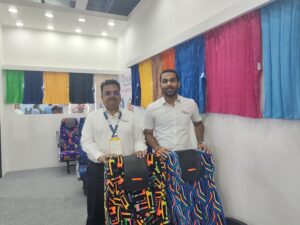
Q. How do you see the market for carpets and transportation textiles in the automotive sector?
Armaan Mehra: The automotive segment is growing steadily. It is expected to become a very large industry in India by 2030, and as demand for buses and other transportation vehicles increases, the requirement for fabrics, flooring and curtains will also grow. We are seeing a lot of new concepts emerging in the bus industry. Manufacturers such as Volvo and JBM are working towards developing world-class bus concepts and interiors. This is where our role becomes important. We work with bus manufacturers to help them develop interiors that meet international standards in terms of design, quality and aesthetics. The customer today is looking for a much better overall experience, and the interior plays a major role in that experience.
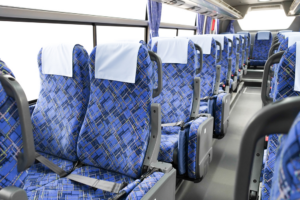
Q. How do your fabrication and textile solutions help OEMs improve product efficiency?
Armaan Mehra: We provide an end-to-end solution. This includes everything from carpets and bus seat covers to curtains, both stitched and unstitched. Essentially, we work across the complete supply chain rather than supplying just one individual product. We also have a strong R&D department where we continuously develop new concepts based on international trends as well as local requirements. A bus is a highly customised product. Different operators and OEMs have different requirements in terms of colours, materials, patterns and interior designs. We support manufacturers at every stage, which helps them keep pace with changing market trends and customer expectations.
Q. Quality is becoming increasingly important for customers. What kind of quality standards does Niemla offer?
Armaan Mehra: We are known for our premium quality. Quality has been one of the key reasons behind Niemla’s success. Whatever we supply is designed to meet international quality standards. Whether it is flame-retardant or non-flame-retardant material, we maintain stringent quality requirements. We have our own in-house laboratory, which is also moving towards NABL accreditation. Every material leaving our facilities is tested against international quality standards before it is supplied to the customer for final use. Our objective is to ensure consistency in quality across every product we manufacture.
Q. What kind of investments are you making in R&D, particularly in AI and robotics?
Armaan Mehra: Our R&D investments are focused largely on new machinery, new manufacturing technologies and new product concepts for applications such as curtains, seat fabrics and other transportation textiles. Robotics does not currently play a major role in this particular segment, especially in textile manufacturing. However, AI is opening up some interesting possibilities. We are currently developing an AI-based system for our distributors and customers. At present, when a customer wants to purchase a fabric, they can physically see the fabric but may find it difficult to visualise how it will look once installed on a bus seat, mattress or floor. We are developing a backend system that will allow distributors and customers to select a particular bus model and then choose any fabric from our catalogue. The system will provide a real-time visualisation of how that particular fabric will look on the bus seat, mattress, floor or even as a curtain. This will make the selection process much easier and allow customers to visualise the final interior before making a decision.
Q. Are you planning to launch any new products in the coming months?
Armaan Mehra: We have developed a self-cooling fabric. During the summer, when a bus is exposed to direct sunlight, the seat fabric can remain hot for quite some time even after passengers enter the vehicle. We have developed a fabric designed to address this problem. The self-cooling fabric does not heat up significantly even when exposed to direct sunlight. Once exposed to a cooling air environment, it can cool down in less than two minutes. This can be particularly useful for buses operating in hot climatic conditions and can improve passenger comfort.
Q. How important is the export market for Niemla, and which countries are you targeting?
Armaan Mehra: Exports currently account for around 20 per cent of our business. We are exporting to several international markets, including Bangladesh, Poland, Indonesia, Thailand, Japan and South Korea. These markets are an important part of our international business, and we see further opportunities to expand our presence as demand for high-quality transportation textiles grows globally.
Q. What is your broader vision for Niemla in the transportation textile market?
Armaan Mehra: Our objective is to continue building Niemla as a specialised transportation textile company with strong capabilities across automotive, bus, railway and aviation applications.
We want to combine premium quality with innovation and customisation. The transportation industry is changing rapidly, and interiors are becoming increasingly important in determining passenger comfort and the overall perception of a vehicle. Our focus will therefore remain on developing new materials, improving manufacturing capabilities and using technology such as AI to give customers better solutions and a better experience.